Thank you for visiting our website and shopping at On Two Wheels Motorsports Pty Ltd (ABN 41 066 098 897). Please take the time to read our website Terms & Conditions ('Terms').
References to 'On Two Wheels' or 'us' or 'we' or 'our' means ‘On Two Wheels Motorsports Private Limited' who is the owner of this website. On Two Wheel's registered office is Unit 1, 18 Holborn Circuit, Gledswood Hills NSW 2557, Australia. The term ‘you’ refers to the user or viewer of this website.
Reference to 'business days' in these Terms or any policy means any day that is not Saturday, Sunday or a statutory public holiday in Australia.
If you continue to browse and use this website, you are agreeing to comply with, and be bound by, these Terms (as defined below) govern our relationship with you in relation to your use of this website (www.ontwowheels.com.au) and all related websites operated by On Two Wheels Motorsports Pty Ltd (ABN 41 066 098 897), its related bodies corporate (collectively, the Website) and your purchase of products through them.
On Two Wheels reserves the right to change these Terms at any time. By continuing to use the website (www.ontwowheels.com.au) you consent to any variations. On Two Wheels will not notify you of these variations, and it is your responsibility to regularly check these Terms for any variations including variations to content, products and pricing. Continued use of this website (www.ontwowheels.com.au) following any variation to these Terms will be deemed acceptance of those variations.
TERMS OF USE
You may only use On Two Wheel's website, for personal purposes unless we expressly consent to your proposed use. You agree that you will not use On Two Wheels to:
- commit or encourage a criminal offence;
- transmit or distribute a virus, trojan, worm, logic bomb or post any other material which is malicious, technologically harmful, in breach of confidence or in any other way offensive or obscene;
- hack into any aspect of this website
- corrupt data;
- cause annoyance to other users;
- infringe upon the rights of any other person's propriety rights;
- send any unsolicited advertising or promotional material, commonly referred to as "spam"; or
- attempt to affect the performance or functionality of any computer facilities of or accessed through this website.
PERSONAL INFORMATION & PRIVACY
When ordering products, you must provide On Two Wheels with your personal information or that of a gift recipient. You warrant that the information you provide On Two Wheels is accurate, complete and up-to-date and that you will inform On Two Wheels of any changes to that information. You also warrant that you have the authority to provide us with the information that you disclose.
Your account, including your email address and password. You further acknowledge and agree that you will not disclose these details to any person not duly authorised by you. You are solely responsible for all activities that occur on your account and under your email address and password.
You agree that you will immediately notify On Two Wheels of any unauthorised use of your account, email address or password.
On Two Wheels will handle your personal information in accordance with our Privacy Policy.
PRICING
All prices on the website are displayed in Australian Dollars (AUD) and you will be charged in Australian Dollars (AUD).
These Terms should be read in conjunction with our Pricing Policy which is located at the bottom of each page of our website. We may change our prices without notice.
Payment must be made via On Two Wheels' third-party payment gateway. On Two Wheels will provide you with details of how to access the nominated payment gateway when you make your order. On Two Wheels does not store your credit card or banking details. Please check the website for the applicable provider for details of the privacy policies and security measures of these service providers.
By making such payment you agree to the content of those policies and measures. To the maximum extent permitted by law, we will not be liable for any loss or damage arising out of your use of the third-party payment gateway.
You acknowledge that we will perform standard security checks on the payment details you provide to us. In the event of unusual activity, On Two Wheels reserves the right to temporarily or permanently suspend payment via your credit card or debit card and we may contact you, your bank or any other relevant third party to report such unusual activity.
SALE ITEMS AND SPECIAL OFFERS
Where an item is:
- marked at a discounted price ('Discounts');
- purchased during a temporary promotion period (for example, VIP Days, One Day sales, discount offers etc) ('Promotions'); or
- purchased using a coupon or promotional code ('Coupons'),
it is considered a sale item ('Sale Item'). Sale Items are subject to the Sale Returns section of our Returns & Exchanges Policy. Discounts, Promotions, Coupons ('Special Offers') are offered at On Two Wheels’ discretion. Any conditions applicable to the Special Offers will be specified at the time of issue.
ORDER ACCEPTANCE POLICY
Purchases through On Two Wheels are for Australian residents only.
All orders submitted through the Website are subject to acceptance by On Two Wheels. Once you submit your order, you will receive an email from On Two Wheels to confirm receipt of your order. This email confirmation does not constitute an acceptance of the order or an offer to sell products.
On Two Wheels reserves the right to:
- refuse or cancel your order for any reason; and/or
- correct inadvertent errors, omissions or inaccuracies in relation to price, product availability, or product descriptions.
Acceptance of all orders is subject to On Two Wheels confirming availability and price for products ordered. If your order is rejected for any reason you will be given a full refund for any amount paid for the order.
On Two Wheels only accepts your offer, and concludes the contract of sale for the product(s) ordered by you, when we dispatch the product(s) and send you an email confirming that the product(s) have been dispatched to your nominated shipping address. On Two Wheels may cancel your order (including orders accepted by On Two Wheels) without any liability to you if any of the products in your order are unavailable, or there were any errors in price or product description on the Website at the time of placing your order, or due to technical errors in processing your order. If we cancel your order for any reason you will be given a full refund for any amount paid for the order.
If you have placed a Deliver to Store (Click & Collect) order you will only be able to collect your order after you have received an email from Australia Post stating that your order has been successfully delivered to your nominated store. When collecting a Deliver to Store (Click & Collect) order from the store, you are required to supply a copy of your On Two Wheels online order confirmation email with your unique order number and photo identification. If you have not collected your Deliver to Store (Click & Collect) order within 14 days of delivery to the store, On Two Wheels reserves the right to return your Deliver to Store (Click & Collect) order to our stock and process a full refund for any amount paid for the order.
ORDER CANCELLATIONS
If you notify us in writing before products have been dispatched, On Two Wheels may be able to accommodate order cancellations. If items have been shipped, On Two Wheels reserves the right to refuse an order cancellation or charge a cancellation fee if we are able to have the package returned by our delivery service.
SHIPPING & DELIVERY
Please refer to our Shipping Policy and Returns & Exchanges Policy for further information. You can track your order using the consignment number you receive via email when you place an order, or by logging in to My Account and reviewing your order there.
RETURNS
On Two Wheels will accept returns in accordance with our Returns & Exchanges Policy.
INTELLECTUAL PROPERTY
Unless otherwise indicated, On Two Wheels owns all copyright of the content and information on On Two Wheels’ website. All registered or unregistered trademarks and logos used on On Two Wheels are the property of their respective owners.
All copyright, content, information, data, text, codes, news, file content, layout design, software, images, graphics, articles, trademarks, logos, interfaces, photographs, tutorials, videos, reviews, forum posts, databases and all other intellectual property and information on the On Two Wheels website ('Intellectual Property') is owned, controlled by, or licensed to On Two Wheels.
Except for viewing the content for your own personal non-commercial use, we do not grant you any rights to use the On Two Wheels website or any content, information and other Intellectual Property on this website for any other purpose unless we expressly consent in writing.
You must not use or replicate any of our Intellectual Property other than as permitted by law. Specifically, you must not use or replicate our Intellectual Property for commercial purposes unless we expressly agree in writing, in which case we may require you to sign a license agreement.
If you wish to use content, images or any of our other Intellectual Property, you should submit your request to us at the following email address: marketing@ontwowheels.com.au
ACCURACY OF CONTENT
Whilst On Two Wheels updates the Website regularly, it makes no representation as to the accuracy, currency or completeness of any Content or services on the Website. All Content and services are provided on the basis that you undertake the responsibility for assessing their accuracy and that you rely on the Content and services entirely at your own risk. You should seek independent advice before acting on any material or information contained on the Website of any Third Party Website, and you must not provide any warranties to third parties in relation to the Content, the services or the performance of the Website.
To the extent that you acquire goods or services from On Two Wheels as a 'consumer' (as that term is defined in section 3 of the Competition and Consumer Act 2010 (Cth), you may have certain rights and remedies (including, without limitation, consumer guarantee rights) that cannot be excluded, restricted or modified by agreement. Nothing in these Terms operates to exclude, restrict or modify the application of any implied condition or warranty, provision, the exercise of any right or remedy, or the imposition of any liability, implied or conferred the Australian Consumer Law (as set out in Schedule 2 to the Competition and Consumer Act 2010 (Cth) or any other statute where to do so would contravene that statute or cause any term of these Terms to be void (Non-excludable Obligations)
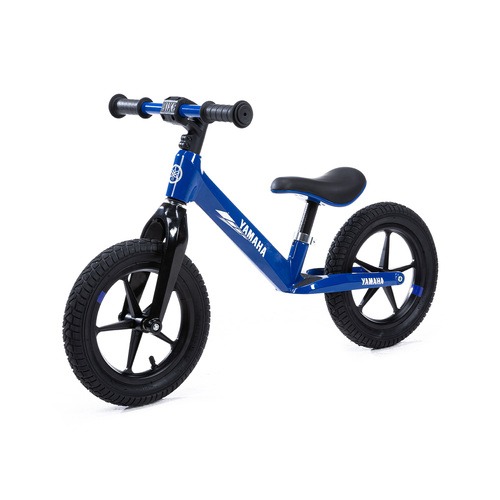
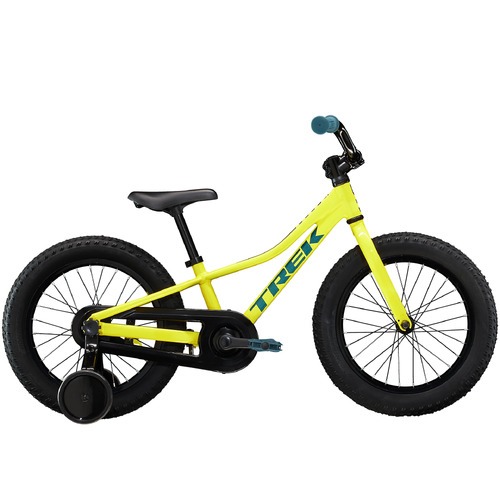
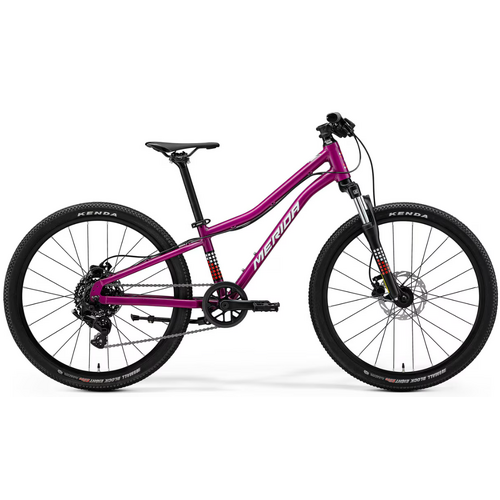
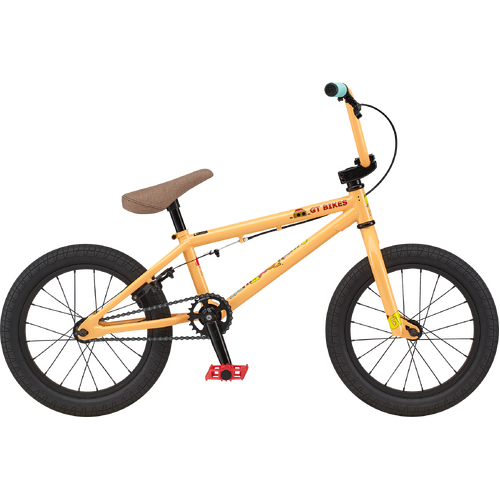
Product images on On Two Wheels or this website are for illustrative purposes only and may not always be an exact representation of the listed product and may vary from the delivered product depending on your monitor settings and computer equipment. On Two Wheels is not responsible for any such variations. However, if a product is materially different from the representation on our website, you may be entitled to a refund or exchange under Australian consumer law. You must use the images as a reference only and rely on product titles, descriptions and fitment listings for accuracy.
Unless otherwise stated, any additional items and accessories shown in a product image are for display purposes only and may not be included in the listed price. You must ensure that you carefully read the product title and description before purchasing anything from our website.
To the maximum extent permitted by law, neither we nor any third party provides any warranty or guarantee as to the accuracy, or completeness of information and content contained on the On Two Wheels website. We expressly exclude liability for any such inaccuracies or errors to the maximum extent permitted by law.
LIABILITY
You understand that our website is provided on an “as-is” basis. While we aim to update our website regularly, neither On Two Wheels, nor any of its employees or agents, makes any representation or warranty as to the accuracy, completeness, currency or reliability of the information contained on this website. We reserve the right to restrict access to parts of this website or the entire website, change or withdraw any items, information or content featured on this website without notice.
expressly excludes all conditions, warranties, rights, remedies, liabilities or other terms that may be implied or conferred by statute, custom or the general law that impose any liability or obligation on On Two Wheels; and does not warrant or guarantee in any way:
- the accuracy or completeness of any Content;
- that access to or operation of the Website will be uninterrupted or error free;
- that any defects on the Website will be corrected immediately; or
- that the Website will be free from viruses or other contamination.
On Two Wheels will not be liable to you for loss of profit or business revenue, reputation, goodwill, business or business contracts, use, anticipated savings, loss or corruption or destruction of data, loss arising from the transmission of viruses, or any indirect or consequential liability, loss or damage suffered by you (including any liability incurred to a third party) in connection with the Website; including as a result of any negligence of On Two Wheels, and whether or not On Two Wheels was advised in advance of the possibility of such liability, loss or damage.
On Two Wheels' total liability to you (including as a result of any negligence of On Two Wheels) in respect of any and all loss or damage suffered by you in connection with the Website is otherwise limited to $100.
PASSWORDS AND LOGINS
If you sign up for a user account on the Website, you:
- must keep your username and password confidential and secure; and
- accept all liability for any unauthorised use of any username or password issued to you (other than any unauthorised use resulting from any negligent act or omission legally attributable to On Two Wheels).
When signing up for a user account, you must provide accurate, complete and up-to-date information as requested during the sign-up process. It is your responsibility to inform On Two Wheels of any changes to that information. You may do this at any time by updating your details via your user account.
OTHER ACTIVITIES AND THIRD-PARTY WEBSITES
From time to time, On Two Wheels may promote, or advertise events, offers, items, services or other activities that may be conducted offline or which may be conducted by third parties. These events, items, services or other activities may be subject to separate terms and conditions. You acknowledge that you participate in any of these activities entirely at your own risk and in accordance with those separate terms and conditions.
This website may feature or display hyperlinks and pointers to websites operated by third parties. Such websites do not form part of our website and are not under our control. These links are provided for convenience to provide further information to you. If you click on a link to any third-party websites, you leave our website entirely at your own risk.
We have no responsibility for the content of any third party websites, and we shall not be liable to you or any third party, whether in an action in contract, negligence or other tort, in respect of any loss, liability, cost or expense (including special, indirect or consequential loss or damage) you or any third party suffers arising from, or in connection with, your use of those third party websites.
COOKIES
Cookies may be used on some areas of the Website. A cookie is a small file placed on a user's hard drive which tracks website navigation. For example, a cookie can be used to store registration information so that a user does not need to re-enter that information on subsequent visits. If you are concerned about cookies, most browsers have an option which permits users to refuse cookies. A user can refuse a cookie and still fully navigate our Website. In order to collect statistics, we may anonymously log information, and identify categories of users by data items such as domains and browser types.
INDEMNITY
On Two Wheels is not liable for any loss, costs, expenses, liability or damages whatsoever (actual or consequential), arising from, or in any way related to, your access and use of the On Two Wheels website and any content or information contained on, or obtained through the site. On Two Wheels does not warrant that On Two Wheels will be uninterrupted or error free.
You indemnify us and hold us harmless from and against any and all liabilities or expenses arising from or in any way related to your use of On Two Wheels' website and all information and content contained on, or obtained through the On Two Wheels website, including any liability or expense arising from claims, losses, damages (actual and consequential), suits, judgments, litigation costs and solicitor’s fees of every kind and nature incurred by you or any third parties through you.
COMPLIANCE WITH LAWS
You must use On Two Wheels' website in accordance with all applicable laws, rules and regulations.
You must not use, nor will you allow or authorise any third party to use, On Two Wheels' website for any purpose that is unlawful, defamatory, harassing, abusive, fraudulent or in an obscene or any other inappropriate way, or in a way which conflicts with On Two Wheels' website or our services. If your contributions to our forum (if any) or any public comments you make on On Two Wheels' website are, in our opinion, of a type described in this paragraph, we may at our discretion, refuse to publish such comments and/or remove them from On Two Wheels' website.
We reserve the right to refuse or terminate you use of On Two Wheels' website at any time without notice or reason.
FRAUD PREVENTION
All orders placed must obtain pre-approval with an acceptable method of payment, as established by our credit and fraud avoidance department. We may require additional verifications or information before accepting any order and orders will be held from shipment until security checks have been completed.
We will make reasonable attempts to contact you using the details provided to complete the necessary security checks. Failure to comply with such requests from On Two Wheels will result in the order being cancelled and the funds being refunded.
To the maximum extent permitted by law, On Two Wheels will not be liable to you or to any third party, whether in an action in contract, negligence or other tort in respect of any loss, liability, cost or expense including special indirect or consequential loss or damage however caused, which may arise directly or indirectly from a distributed denial-of-service attack or by any malicious or harmful programs, scripts or technologies that may affect the On Two Wheels website, system failures or any other harmful material that may infect your computer, device, programs, data or other proprietary material. You agree to release us from any such liability.
TERMINATION OF USE
You may stop using On Two Wheels at any time for any reason.
On Two Wheels reserves the right in its absolute discretion to suspend or terminate at any time your access to, and use of, On Two Wheels' website without notice and for any reason, including but not limited to a breach of these Terms. The suspension or termination shall not affect either party’s rights or liabilities.
On Two Wheels may disclose any information we may have about a user in relation to an investigation or allegation that your use of On Two Wheels' website is in breach of these Terms or is in breach of law or other regulation. On Two Wheels reserves its right to identify or bring legal action against any person who is breaching these Terms, including obtaining injunctive relief.
SECURITY
You use the internet and On Two Wheels' website at your own risk. To the maximum extent permitted by law, On Two Wheels does not warrant or guarantee that access to On Two Wheels or this website will be uninterrupted or error free, or that they will be free from viruses or other contamination.
When using On Two Wheels, the internet or any third-party networks or facilities, you are using networks, facilities and services that are beyond the control of On Two Wheels. You assume all risk and liability of your use of On Two Wheels, and any such third-party networks and facilities, including access to On Two Wheels via such media.
Every purchase you make through On Two Wheels is as secure as current technology will allow. When you process an order through On Two Wheels your personal information is encoded with 128-bit SSL (secure socket layer) encryption. This means that any sensitive data cannot be intercepted and read as it travels down your phone line to our secure server. All payments are made through On Two Wheels' nominated payment gateway, so no credit card details are stored on our computer systems.
On Two Wheels recommends you review On Two Wheels' Privacy Policy before disclosing any personally identifiable information.
OUTAGES
On Two Wheels reserves the right to cease, interrupt or withdraw your access to On Two Wheels' website for any reason, including without limitation, for upgrades and maintenance of the site.
SEVERABILITY
If any provision of these Terms is found to be invalid or unenforceable by a court of law, it may be severed and will not affect the remainder of these Terms, which will continue in full force and effect and these Terms will be deemed amended to replace, to the extent legally permitted, the rights and obligations contained in the invalid, illegal, or unenforceable provision. The invalidity, illegality, or unenforceability of any provision of these Terms will not constitute failure of consideration. Any failure by On Two Wheels to act or enforce these Terms immediately will not be considered a waiver of On Two Wheels' right to take any such action.
FORCE MAJEURE
If we are unable to perform in whole or in part, any obligation under these Terms because of any fact, circumstance or matter beyond our reasonable control, we are relieved of that obligation to the extent and for the period that it we are unable to perform the obligation. You agree that On Two Wheels will not be held liable for any delay or failure in the performance of any part of our services to you.
GOVERNING LAW
You are responsible for compliance with all laws and regulations applicable to your location. These Terms are governed by, and construed in accordance with, the laws of Australia. Any disputes concerning On Two Wheels, or this website are to be resolved by the courts having jurisdiction in Australia.
GIFT CARD TERMS & CONDITIONS
These terms and conditions govern your purchase and use of On Two Wheels gift cards and eGift cards (together, gift cards). By purchasing or using a gift card, you indicate you have read, understood and accept these terms and conditions. If you have any questions about these terms and conditions, please contact us at marketing@ontwowheels.com.au.
PURCHASING A GIFT CARD
Gift cards can be purchased:
- online at www.ontwowheels.com.au or
- in-store at 18 Holborn Circuit, Gledswood Hills NSW 2557.
The purchase of a gift card is deemed to be complete:
- if online, at the time you receive an order confirmation at your nominated email address; or
- if instore, at the time payment for the gift card is processed.
- You cannot cancel the purchase of a gift card or return a gift card after 3 years or purchase a gift card using Afterpay.
VALIDITY & REDEMPTION
Gift cards are valid:
- online at the On Two Wheels website - www.ontwowheels.com.au; and
- in-store at 18 Holborn Circuit, Gledswood Hills NSW 2557.
To redeem the value on a gift card:
- Enter the unique gift card code at the online checkout; or
- Scan the gift card instore.
- Gift cards are not legal tender, account cards, credit or debit cards or securities.
- They are not reloadable and cannot be exchanged or redeemed for cash, a discount, or anything else.
USE
- The physical gift card or e-gift card print out must be presented in store.
- Gift cards have a 3 year expiry date from the date of issue and can be used in multiple transactions.
- This means gift cards can be used for any period of time until the balance reaches zero.
- The dollar value on a gift card includes GST.
- If you make a purchase using the gift card for an amount that exceeds the gift card balance, you must pay the excess amount using another payment method.
- You can combine the balances of multiple gift cards to complete a purchase.
- If you return or exchange a product purchased using a gift card, the return or exchange will be governed by our returns and exchanges policy.
LOSS OR DAMAGE
- To the extent permitted by law, our liability is limited to replacing faulty gift cards.
- We will not replace any lost or stolen gift cards, or gift cards damaged by acts or omissions of you or a third party.
- If your gift card is lost or stolen, you should immediately contact us so we can cancel the gift card. This does not oblige us to replace your lost or stolen gift card.
LIABILITY
- We are not liable to you or anyone else for any losses suffered or incurred due to a delay in delivery of your gift card.
- We reserve the right to cancel any gift card for any reason and at any time, without notice to you. If we do so, we will provide you with a refund or a replacement gift card equal to the balance on the cancelled gift card, unless the reason for cancellation was for suspicions of fraud or illegal activity.
VARIATIONS
- We may vary these terms and conditions from time to time.
- Any variations will be effective upon the posting of the revised terms and conditions on our website.
- Your continued use of a gift card after the posting of the revised terms and conditions constitutes your agreement to the revised terms and conditions.
GOVERNING LAW
- These terms and conditions are governed by the laws in force in New South Wales, Australia.
- By purchasing or using a gift card, you submit to the exclusive jurisdiction of the courts in New South Wales.
CHANGES TO THESE TERMS
On Two Wheels may change these Terms from time to time. If On Two Wheels reasonably considers that the change is likely to:
- benefit you or have a neutral or minor detrimental impact on you, On Two Wheels may change these Terms by making such changes immediately without notifying you except by publishing these terms as amended on the Website; or
- have a significant detrimental impact on you, On Two Wheels will make such changes to these Terms no sooner than 10 days after On Two Wheels has notified you of those changes either by putting a notice on this website and/or by email to the email address stored on your user account.
- If you do not accept a change made to these Terms, you must immediately cease using the Website and may close your user account by sending an email to marketing@ontwowheels.com.au or via your user account.
GENERAL
If any provision of these Terms is found to be invalid or unenforceable by a court of law, it may be severed and will not affect the remainder of these Terms, which will continue in full force and effect and these Terms will be deemed amended to replace, to the extent legally permitted, the rights and obligations contained in the invalid, illegal, or unenforceable provision. The invalidity, illegality, or unenforceability of any provision of these Terms will not constitute failure of consideration.
Any failure by On Two Wheels to act or enforce these Terms immediately will not be considered a waiver of On Two Wheels' right to take any such action.
These Terms are governed by the laws of New South Wales, Australia. By using the Website, you irrevocably and unconditionally submit to the exclusive jurisdiction of the courts of New South Wales, Australia in relation to any dispute relating to the Website. You are responsible for your compliance with all laws and regulations applicable to your location.
QUESTIONS
If you have any questions, comments or queries please feel free to email us at info@ontwowheels.com.au to refer to our other policies or terms and conditions on this website.
Last updated February 2022.
© Copyright 2022 On Two Wheels Motorsports Proprietary Limited. All Rights Reserved.